Another brilliant experience making candles 😍
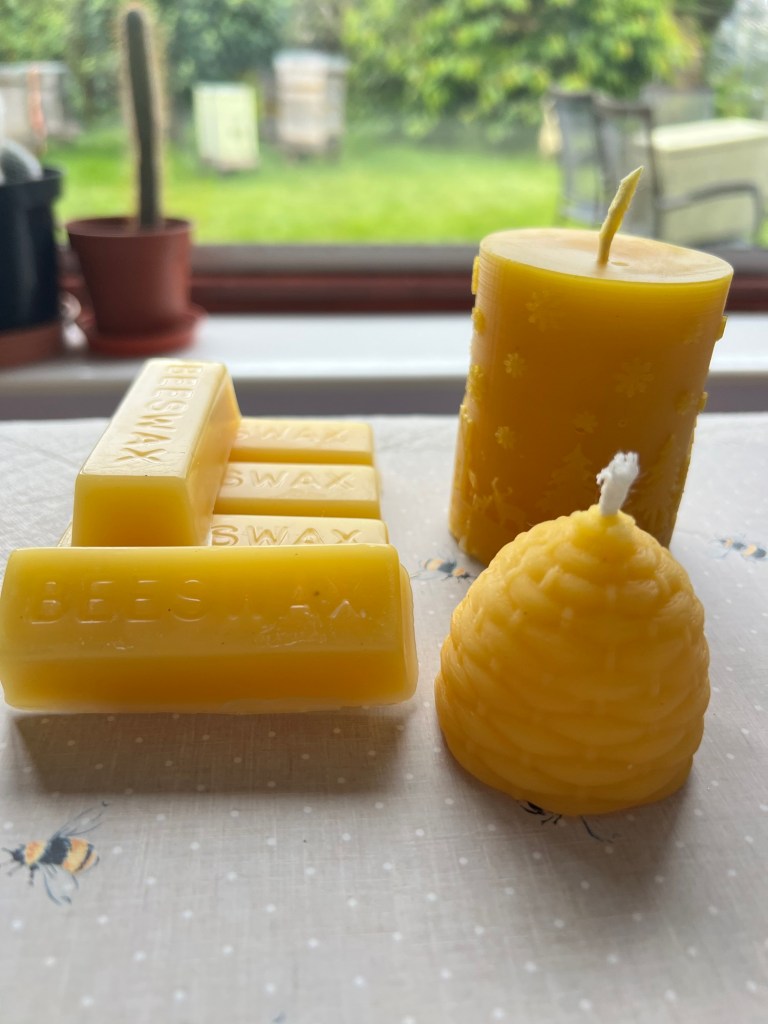
Another brilliant experience making candles 😍
We’re trying our hand at candle making 😍. Wax provided by our own bees, of course!
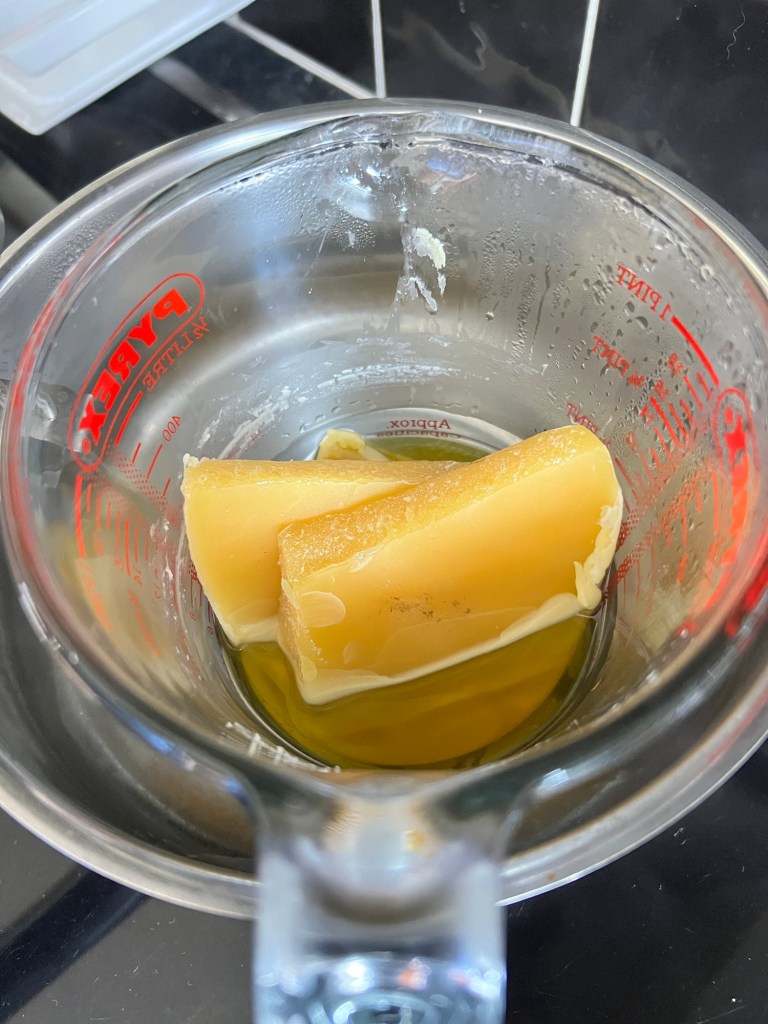
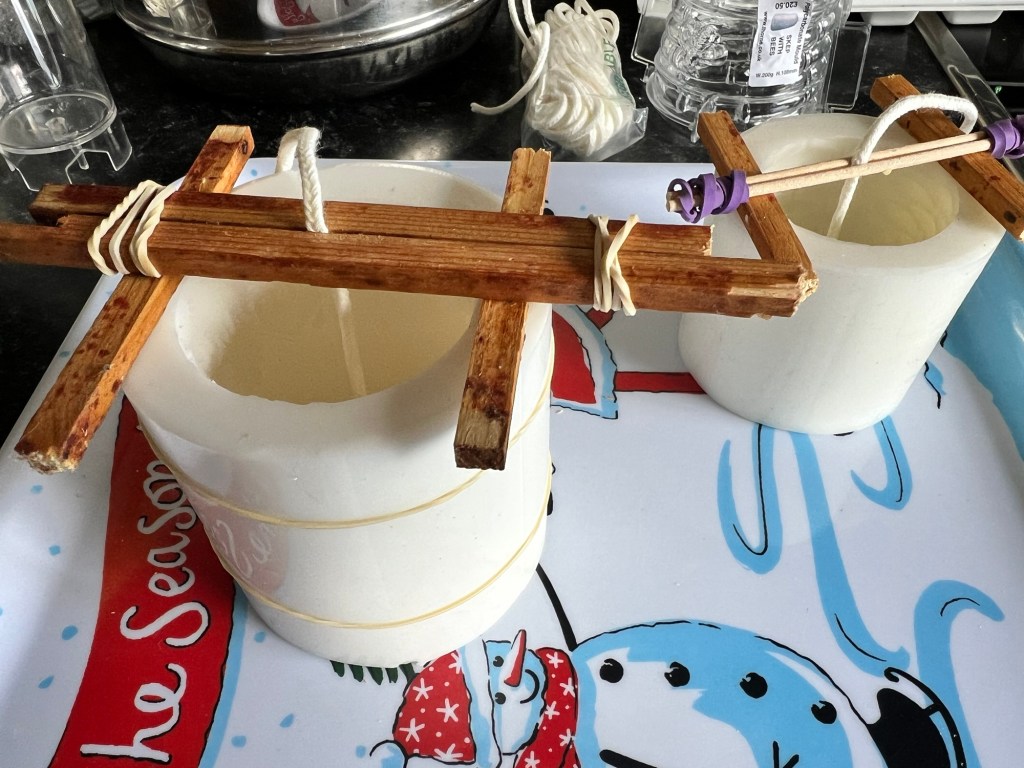
I can’t wait to see the results 😊
Bees leave the hive to poo!
These beautiful creatures keep the home clean by going outside to poo.
The next time you see a little yellow spot on your nice clean laundry (or car), yes that is probably bee poo 🐝 💩🙈
Tis the season to start checking for the Varroa mite.
They have devastating effects on the colony, because they are an invasive species and our native bees haven’t yet adapted to. They harm developing bee cells, and they spread diseases.
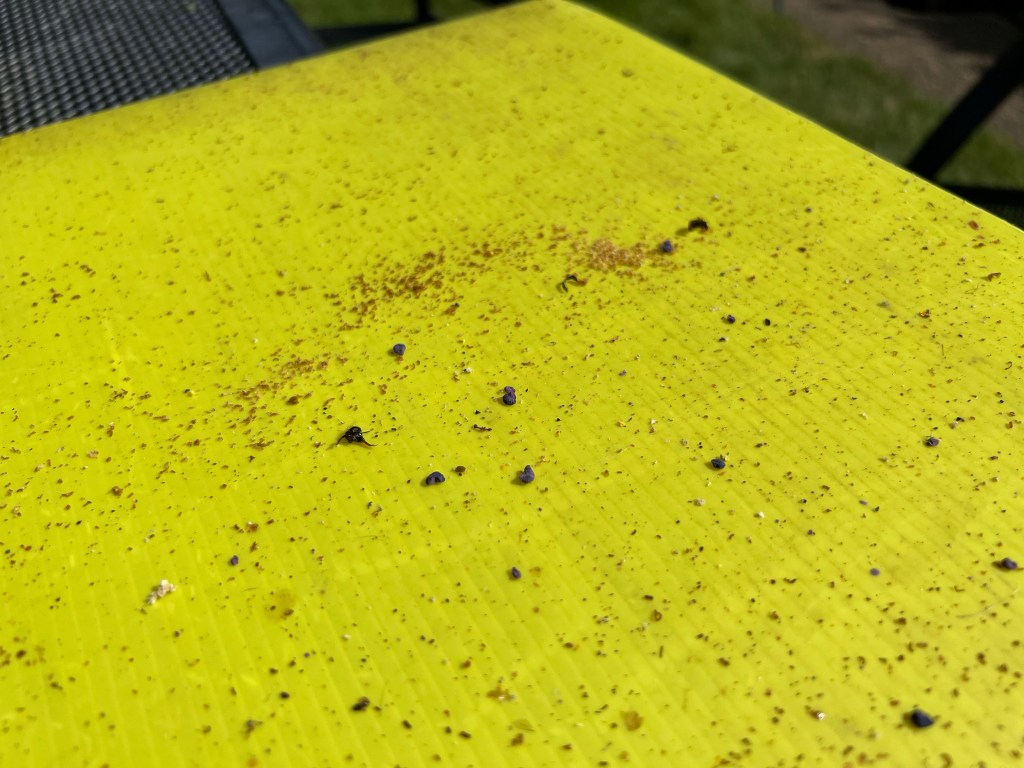
It presents the eternal dilemma of to treat or not to treat.
If we don’t treat, chances are we’ll lose our hives (as natural immunity will take a very long time). Conversely if we treat them, the bees won’t develop any immunity of their own.
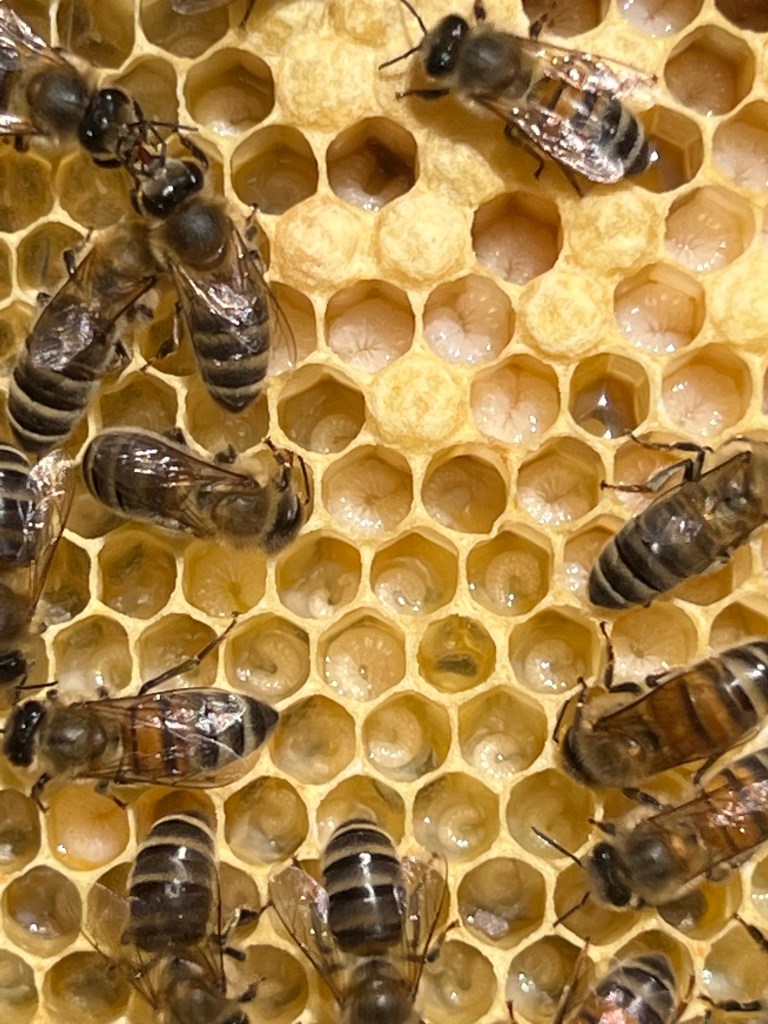
The mite lays its eggs alongside the developing bee . Then when the bee cell is capped in the final stages, the mite hatches and feeds off the developing lava.
The phrase “make hay whilst the sun shines” pretty much reflects the life of a bee colony. They gather nectar from the spring and summer flowers (and even the winter ivy if the weather is clement) and store it as a food source for when the weather prevents them from going out.
As a beekeeper, your job is provide just enough additional space for them to produce more honey than they need. And then you go in and steal it from them!
Of course you always leave enough behind so that they can sustain themselves. And you care for them throughout the winter months too, giving them a ready supply of fondant if they use their own resources too quickly.
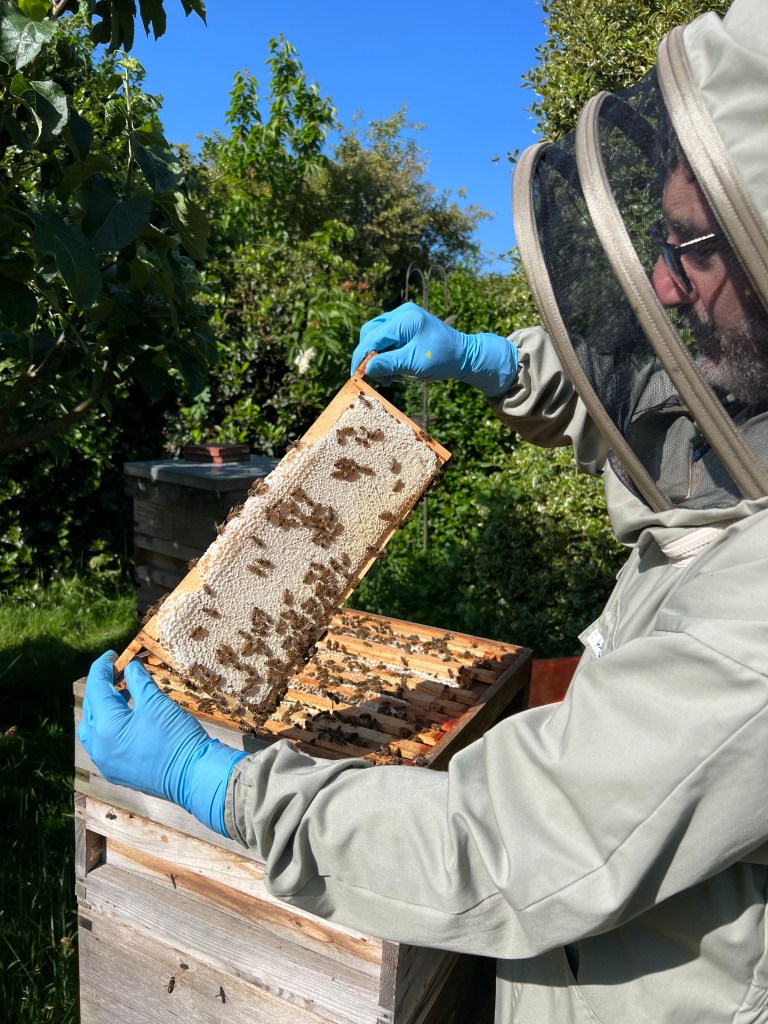
The colony thrive in their “brood box” where the queen lays eggs and the bees tend to them. They make cells throughout in a honeycomb shape and use them to store pollen and honey as well as nurturing the eggs.
An additional box is placed on top (called a “super”) with a wired frame beneath (a Queen Excluder) which allows the worker bees to pass through, but the queen and the drones (the boys) who are bigger can’t access through this frame. The workers can therefore fill the super with honey, free from any interference.
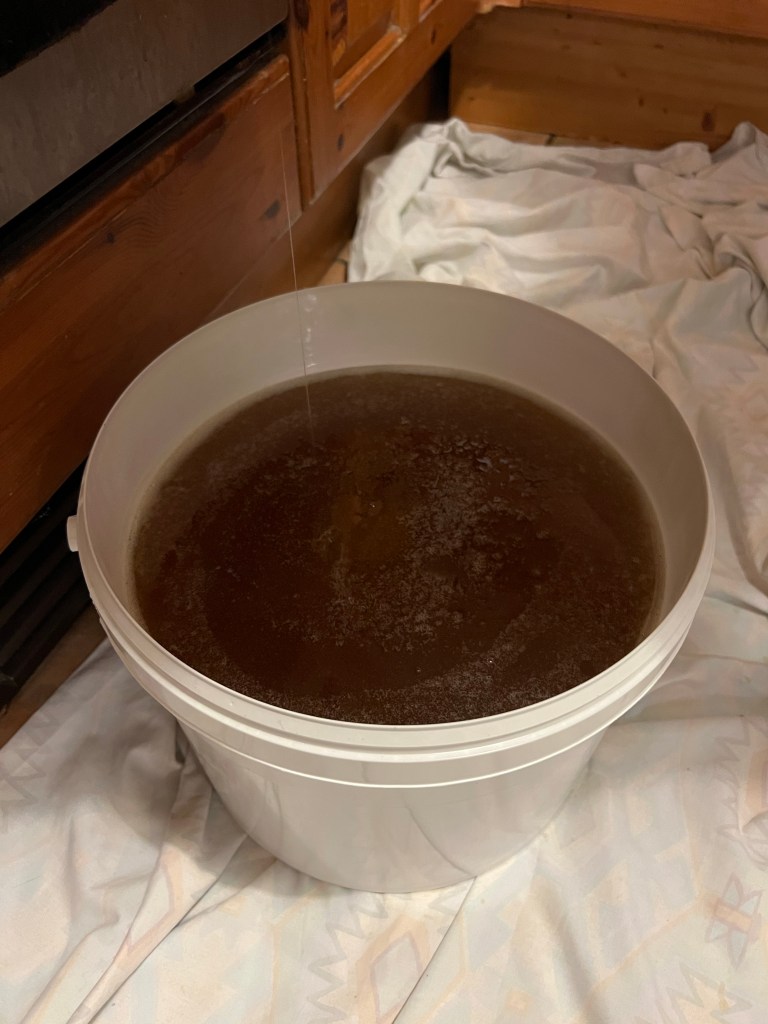
They start by laying nectar into the cells. A combination of bee body heat, and fanning of their wings, reduces the water content. And when the honey is just the right consistency, they cap it to keep it free of mould ready for the winter. Then we pinch it!
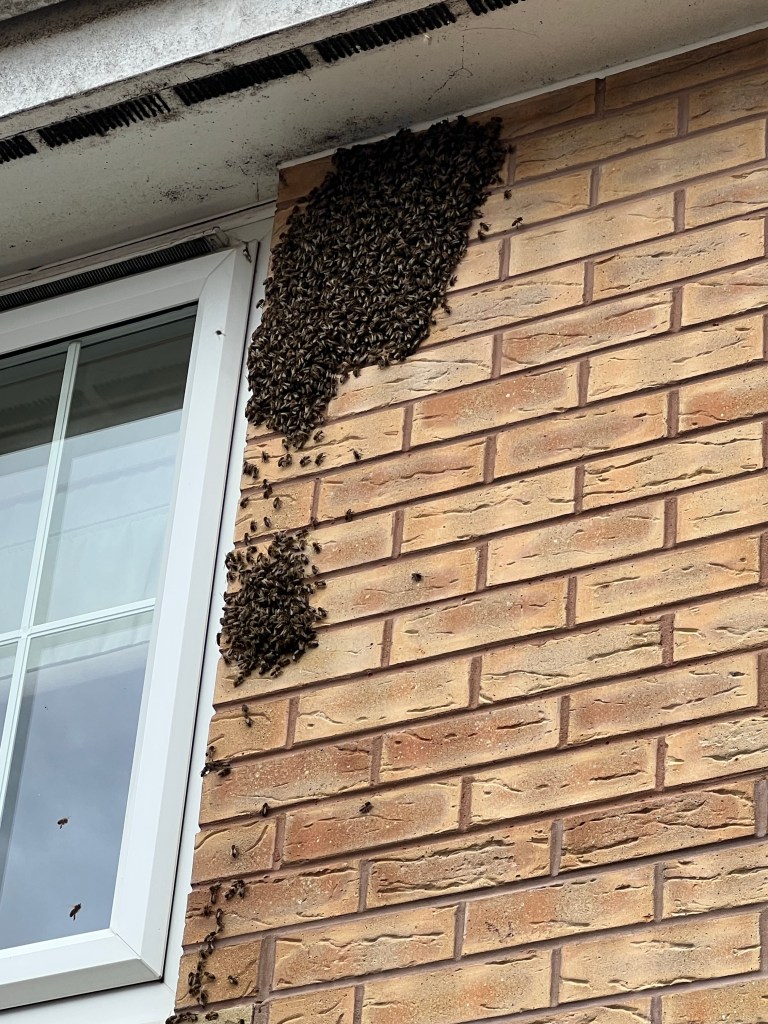
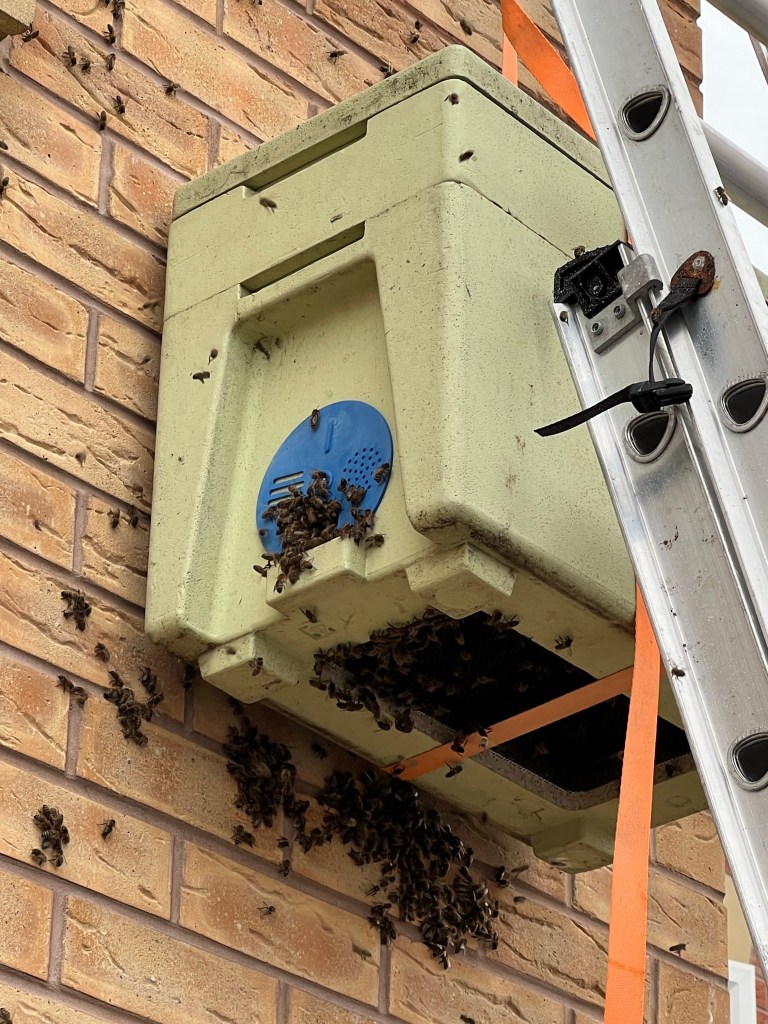
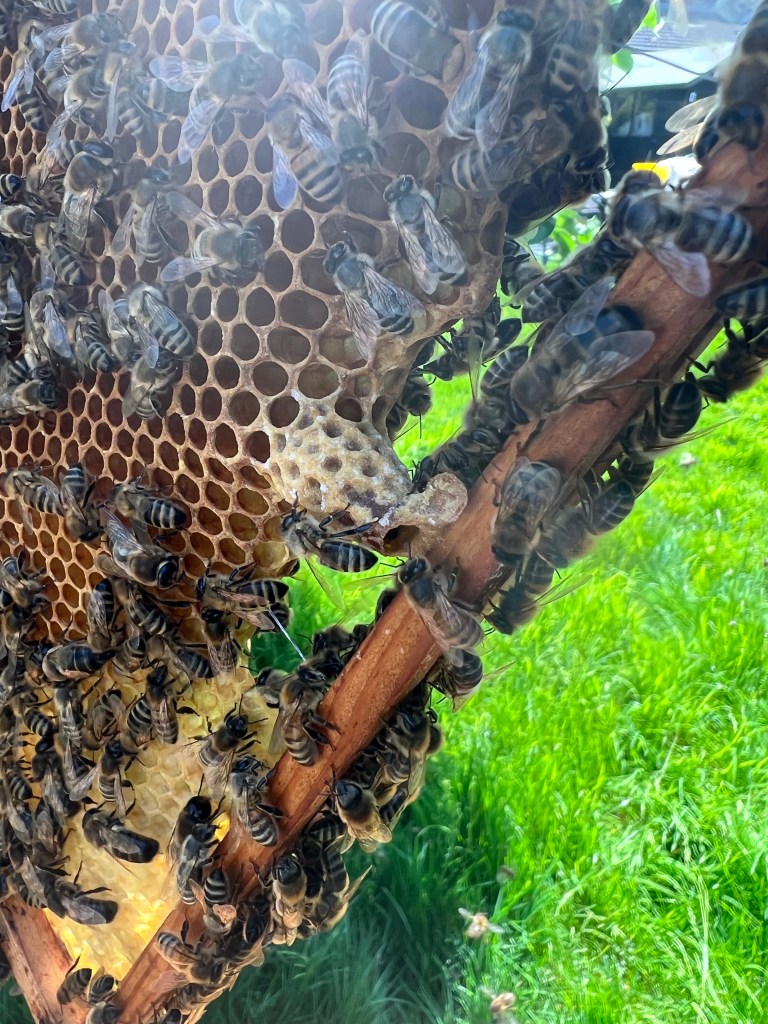
The swarm had been there for almost 24 hours. It was not big, and they were not particularly well huddled up. There may well have been scouts going out looking for the new home. But there were certainly no signs of them being ready to move on.
My darling beekeeper started by scooping a bunch of bees onto a frame. Then placed the frame in a nuc box which he hung from the higher rungs of the ladder. It’s always difficult working at height because your own safety has to come first.
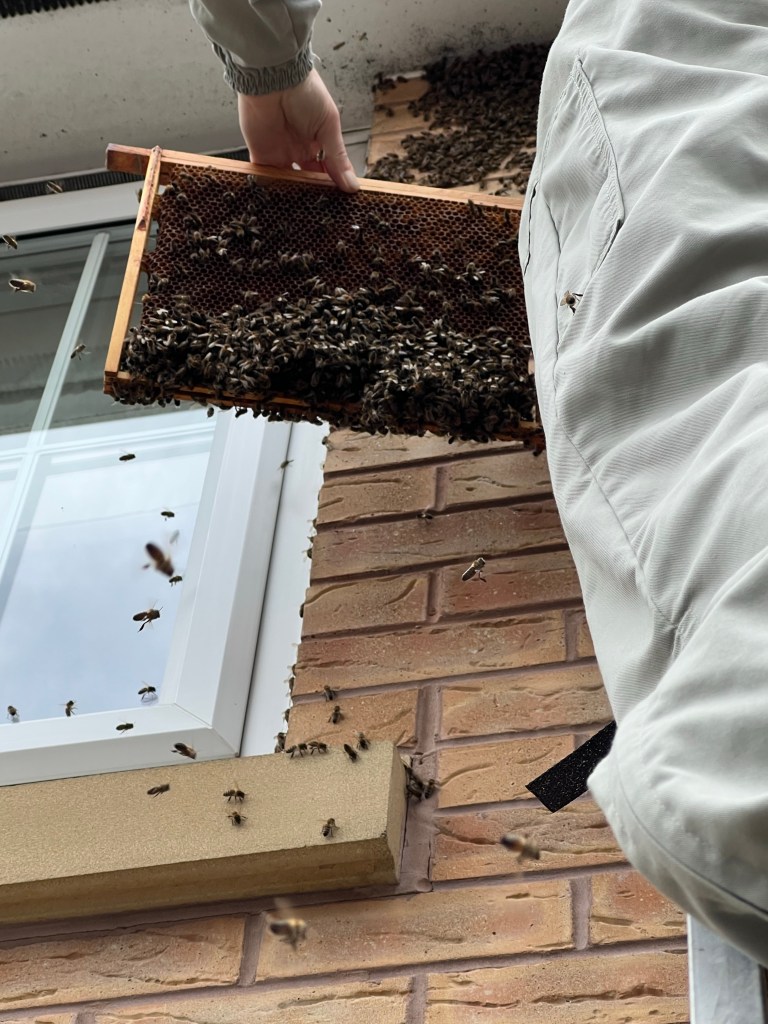
We lost a few bees into the bush below. With the benefit of hindsight, one of them may have been the queen. This is because the bees seemed to be flying aimlessly around. They were in and out the nuc box, and certainly not acting like new home owners about to start unpacking.
After a while we decided to lower the box and stand it on the hedge where a lot of bees had fallen. It took quite some time but eventually they started behaving like they had a purpose. And they started crowding towards the door. We assume the queen eventually crawled out of the bush and into the nuc.
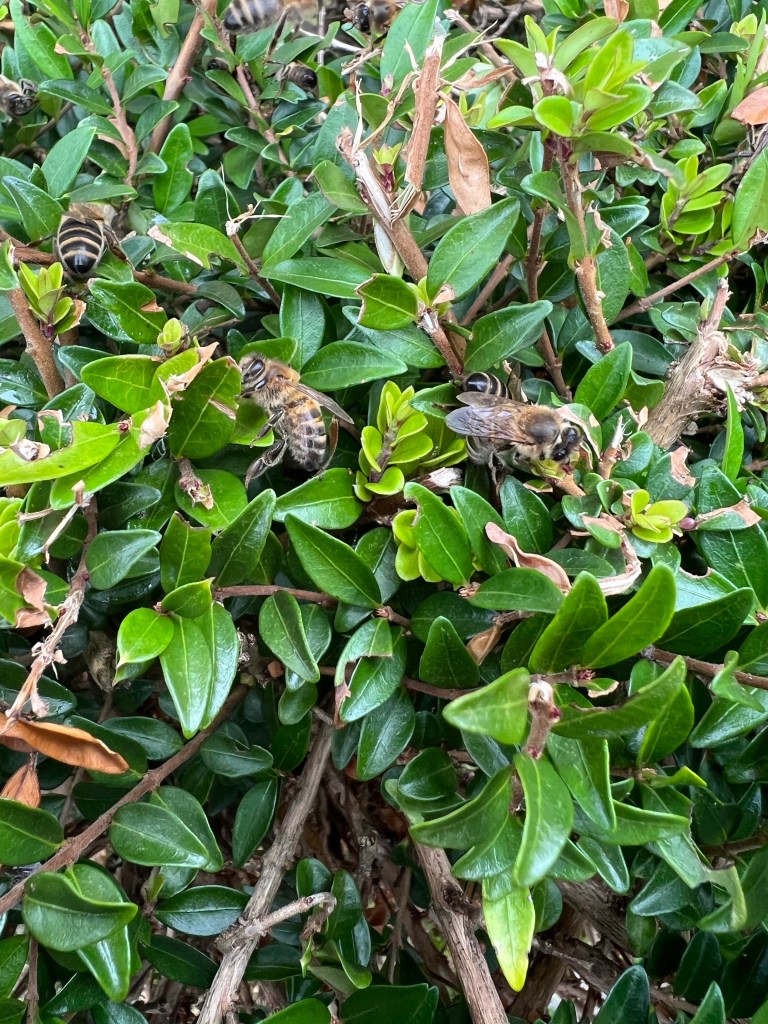
It was a slow but worthwhile job, and eventually we were ready to depart with them in the boot of the car.
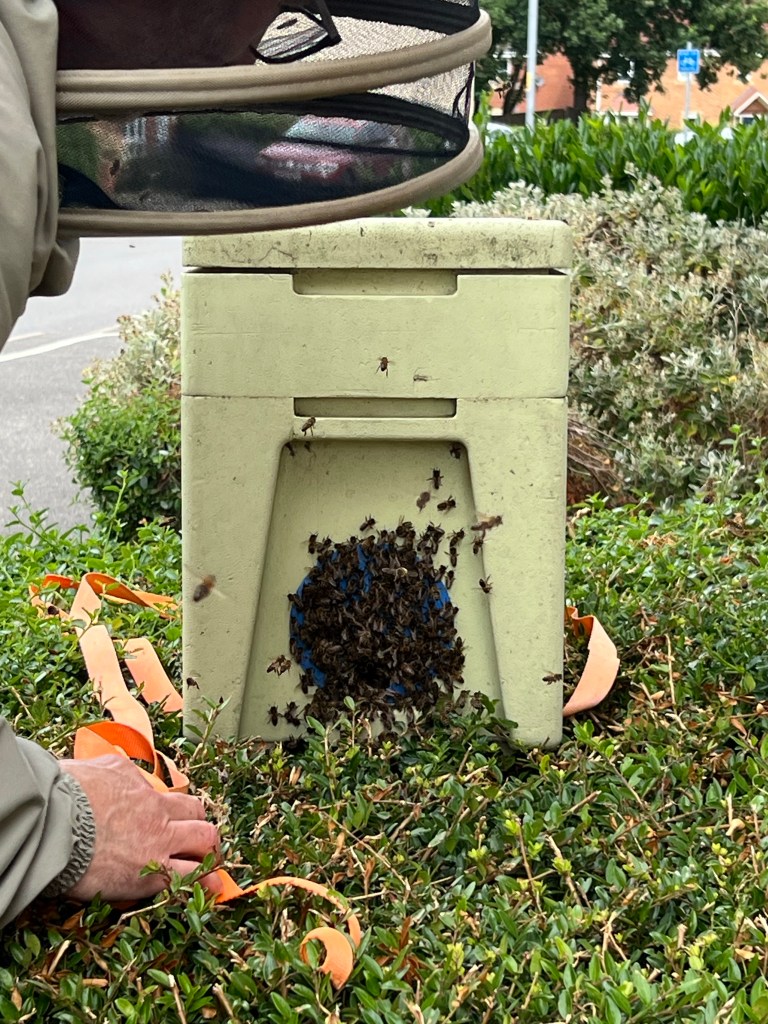
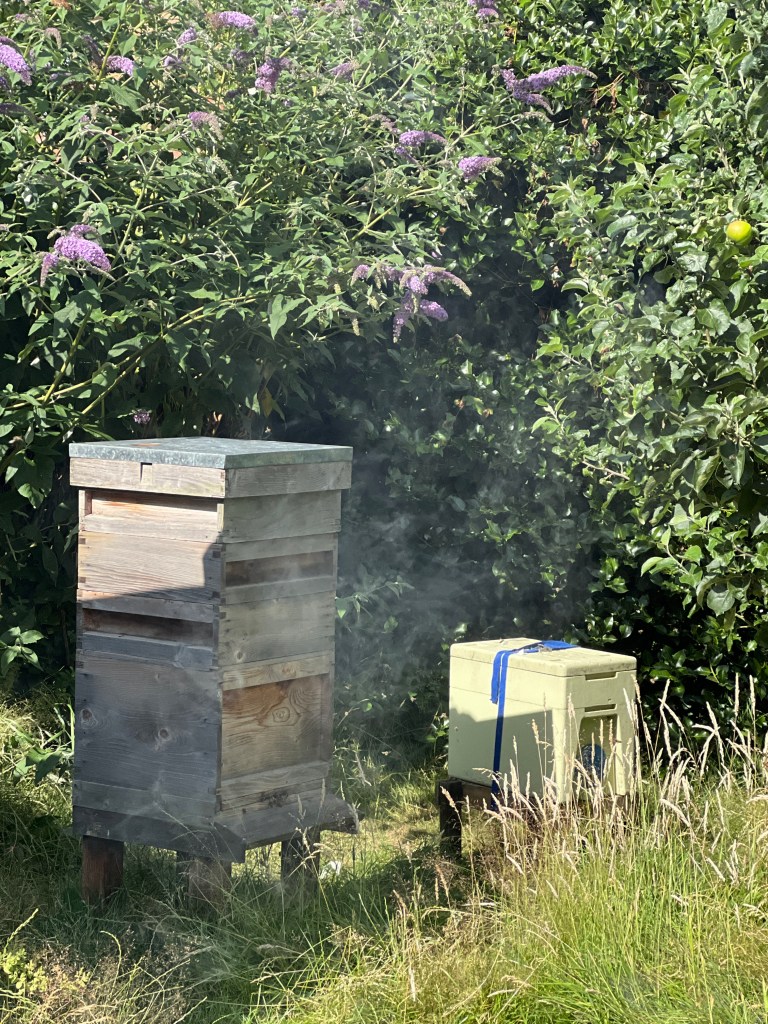
And now they are nicely settled in their new home. 🥰🐝
After seeing a plea on Facebook, we’re heading out to see if we can help someone close by. A swarm has gathered on the wall outside their upstairs window. The weather turned damp and stormy yesterday afternoon, so it looks like they were caught out en-route to their new dwelling and are sitting it out for milder conditions.
We have a nuc box ready, which is a smallish polystyrene type box. And plenty of tools on hand to see if we can lure them into this warmer, safer home.
I’ll post again when we’ve finished.
Well it was fun and drama in the rescue hive this weekend. My gorgeous beekeeper was looking in the box, checking the frames and quickly noticed something was amiss. There were bee cells close to hatching, but no new lava.
The job of our Queenie is to walk around the frames laying egg after egg. If there are no new eggs, this implies the Queen isn’t there anymore.
Bear in mind that this is the swarm we recently rescued. So she’s either flighty (unsettled) or something was wrong with her.
Looking through the frames some more we began to notice there were queen cells. These look very different to the rest, they protrude like a peanut shell. These are made by the hive if they’ve lost their queen, or if they are going to swarm. And two of them had recently hatched!
As we moved through the frames we could hear a distinctly different noise from two places, a strange intense buzzing. This was coming from the queens who do this to test if there are others present. If there are, they’ll either eliminate their competition. Or one (or more) will leave the hive taking a portion of bees with her.
The fight is dirty and fierce. They will sting other queens while they are still inside their shell to stop them from hatching. And fight to the death with those who already have. And as queens have no barb on their stingers, they can stick ´em with the pointy end multiple times.
We located two queens and removed one of them. We left the better looking one behind, choosing her by shape and colour. Then we removed all the remaining queen cells.
All of the cells were on the point of hatching. And because my beekeeper had carefully removed them, they continued to hatch in the container.
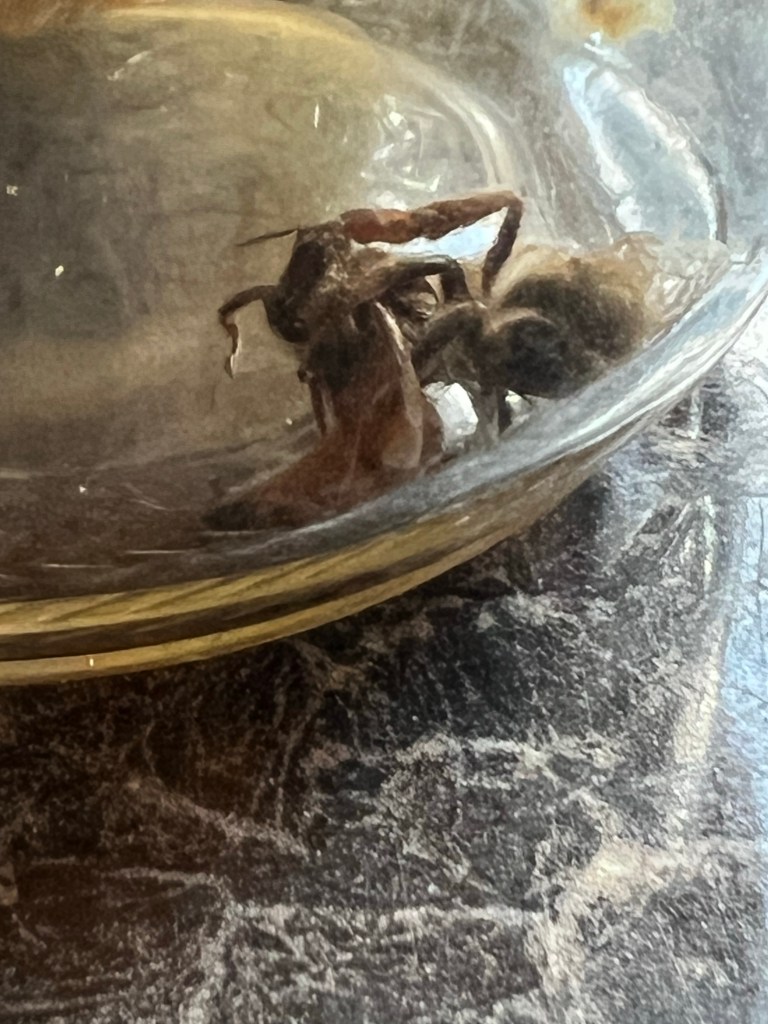
And that’s when the fighting began. And the first rule of fight club?
 Mermaids and bees